

Documentation Index
Fetch the complete documentation index at: https://docs.zencoder.ai/llms.txt
Use this file to discover all available pages before exploring further.
Overview
The Google suite integrations let the AI agent interact with your:- email directly. Search threads, read messages, draft replies, and send emails — all from within a Zenflow task.
- calendar. It can check schedules, find availability, create events, and set reminders — enabling automated meeting prep, scheduling workflows, and time-based task triggers.
- files and documents. Search across Drive, read and create Google Docs, Sheets, and Slides, organize folders, and generate reports, proposals, and summaries.
Permissions
Gmail supports two permission levels:| Permission | What the agent can do |
|---|---|
| Read only | Search inbox, read email threads, extract information from messages and attachments |
| Read & Write | Everything in Read only, plus draft emails, save drafts for review, and send messages |
| Permission | What the agent can do |
|---|---|
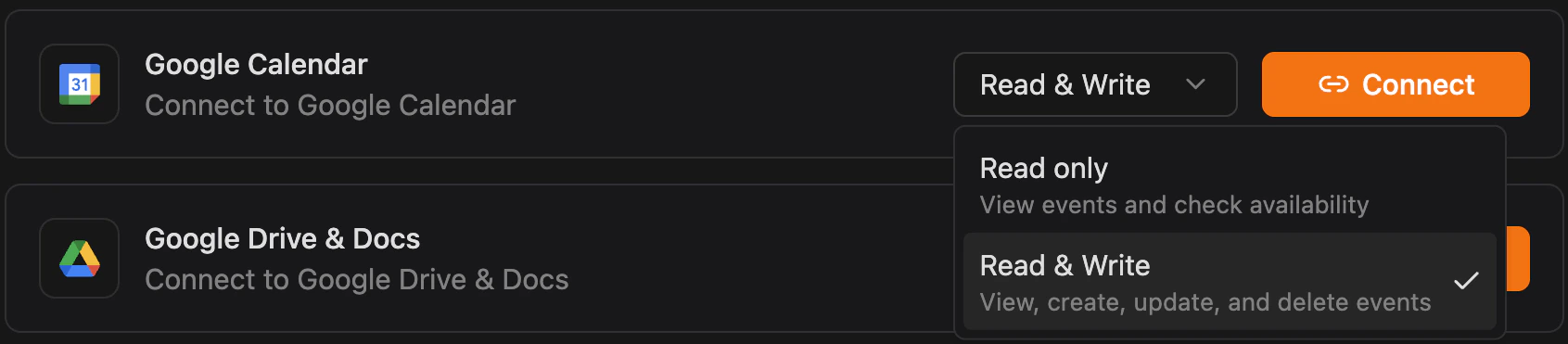
| Read only | Read events, check availability |
| Read & Write | Everything in Read only, plus create calendar invites, set reminders, and manage recurring events |
Connecting to Google Workspace
Step 1: Set Up Google Cloud OAuth (once for all integrations)
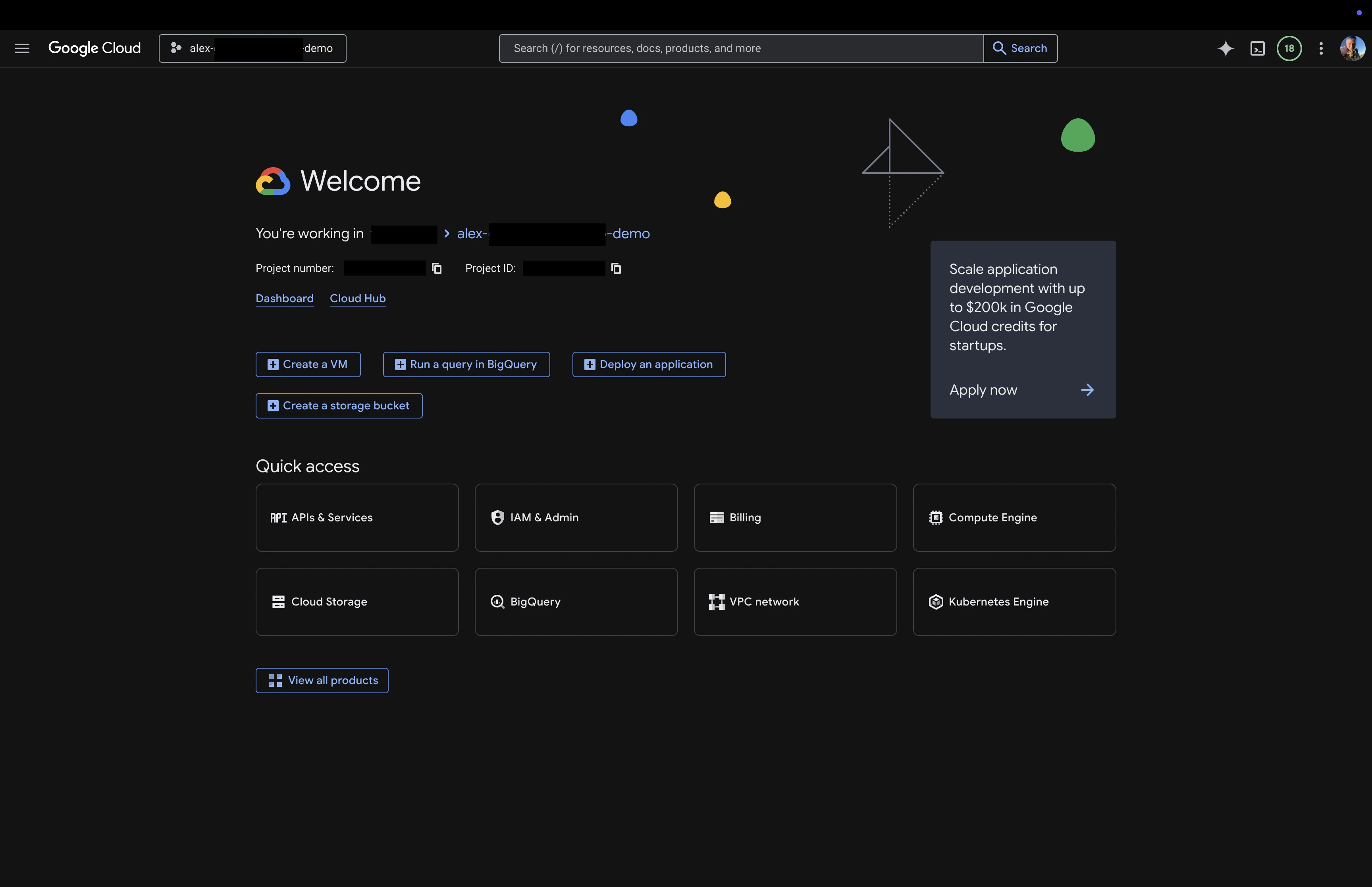
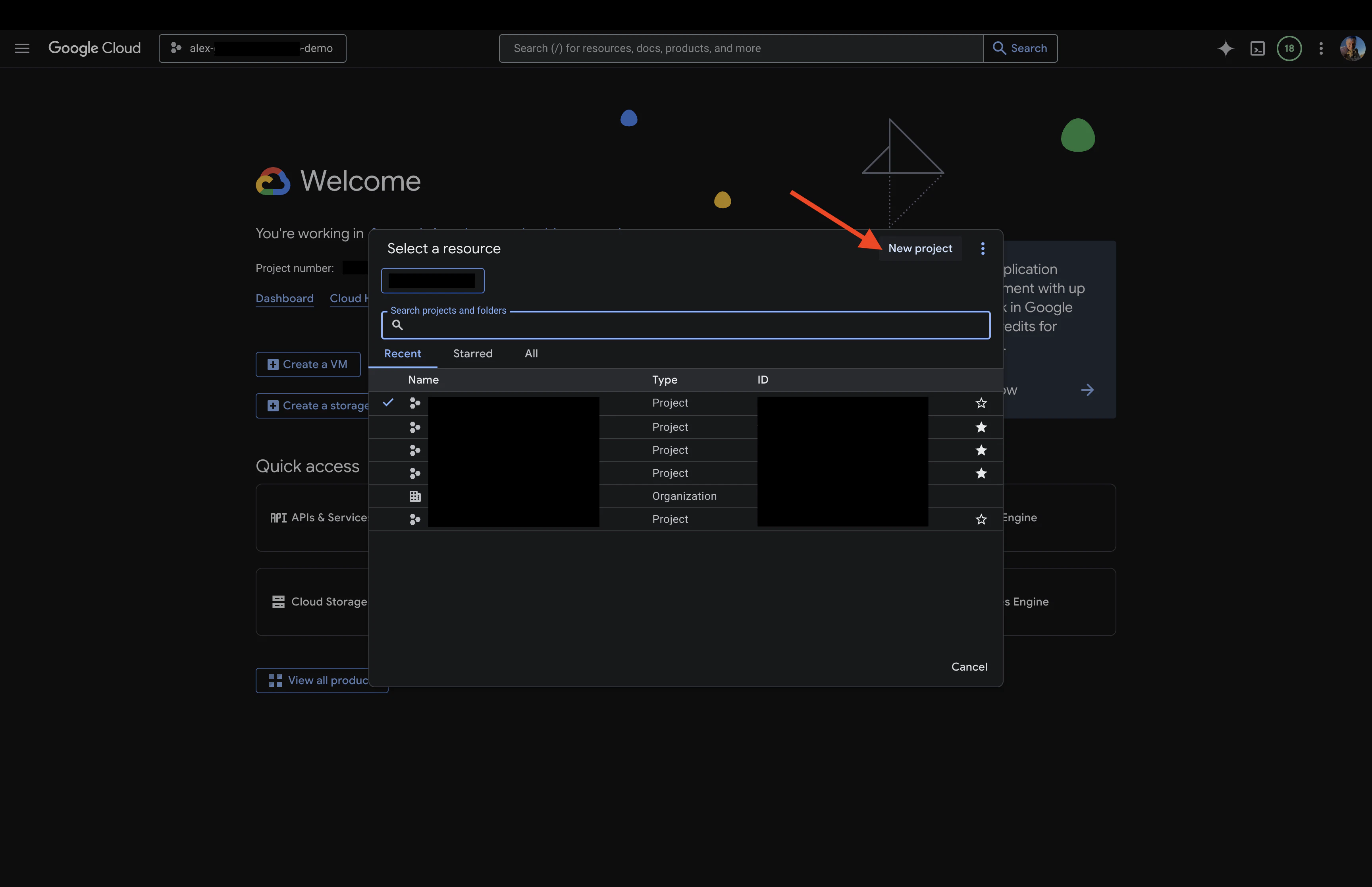
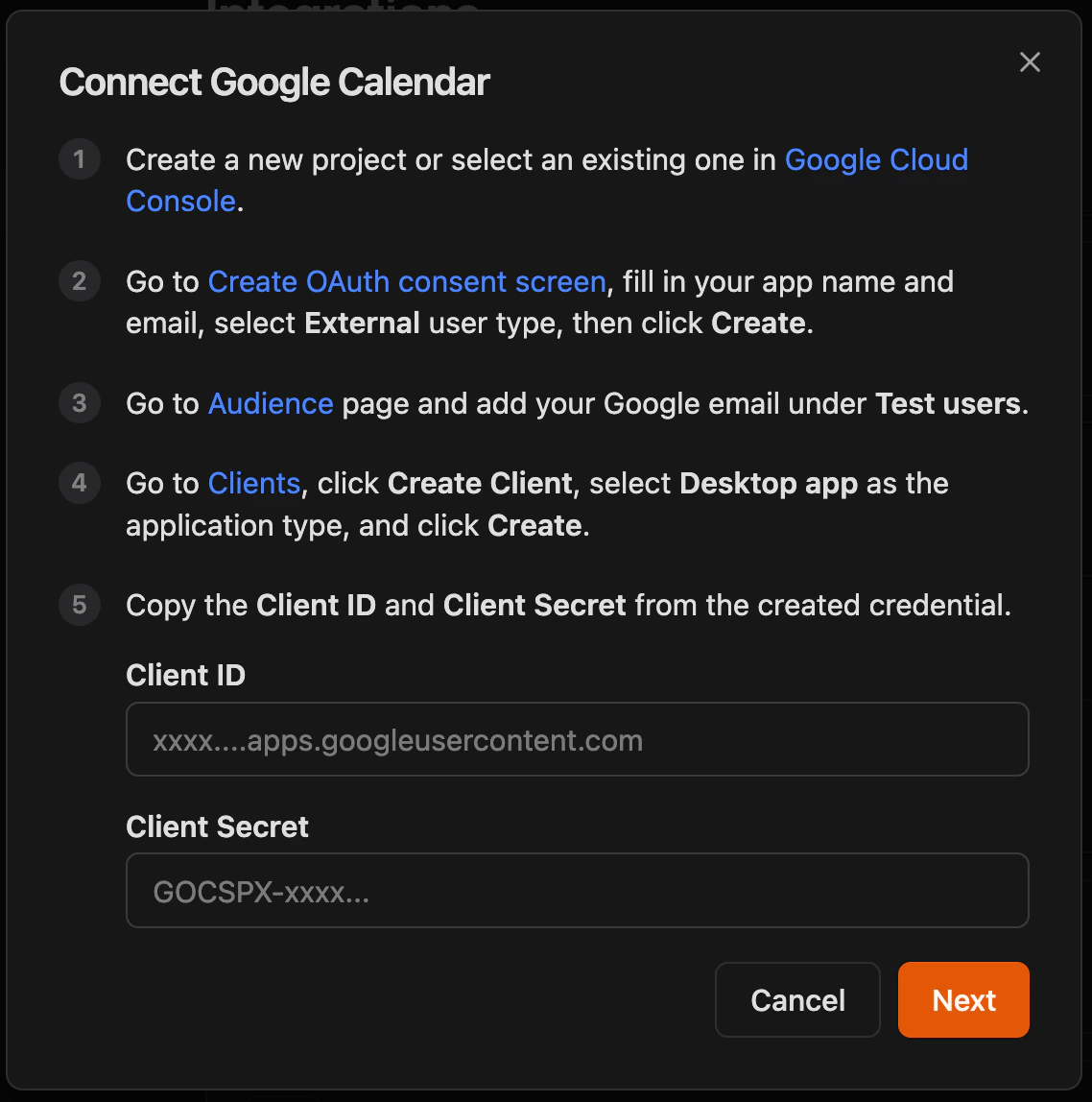
Google Workspace integrations require OAuth credentials from a Google Cloud project. Follow these steps to create them:Create or select a Google Cloud project
Create an OAuth consent screen
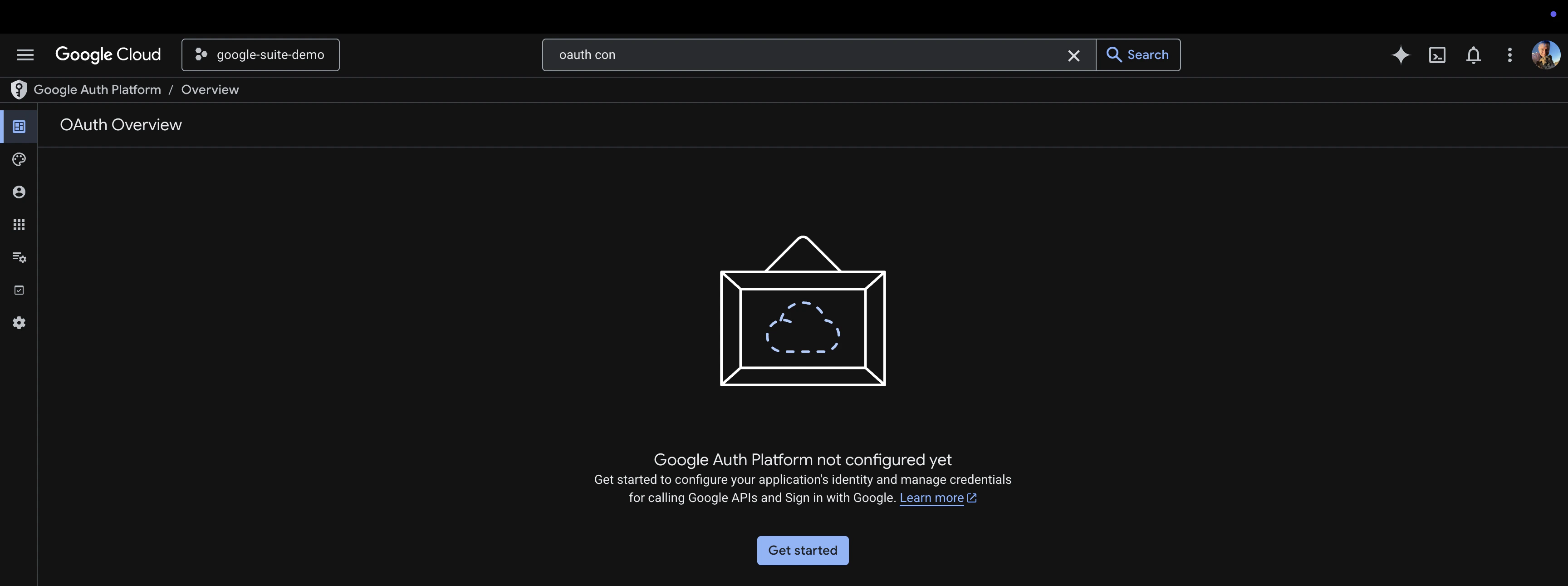
Go to Create OAuth consent screen or search for OAuth consent screen in the search bar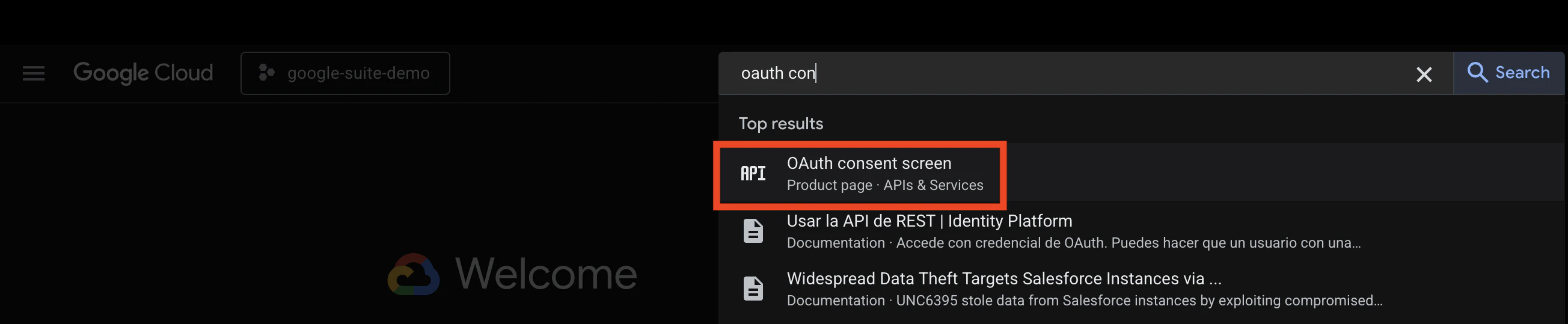
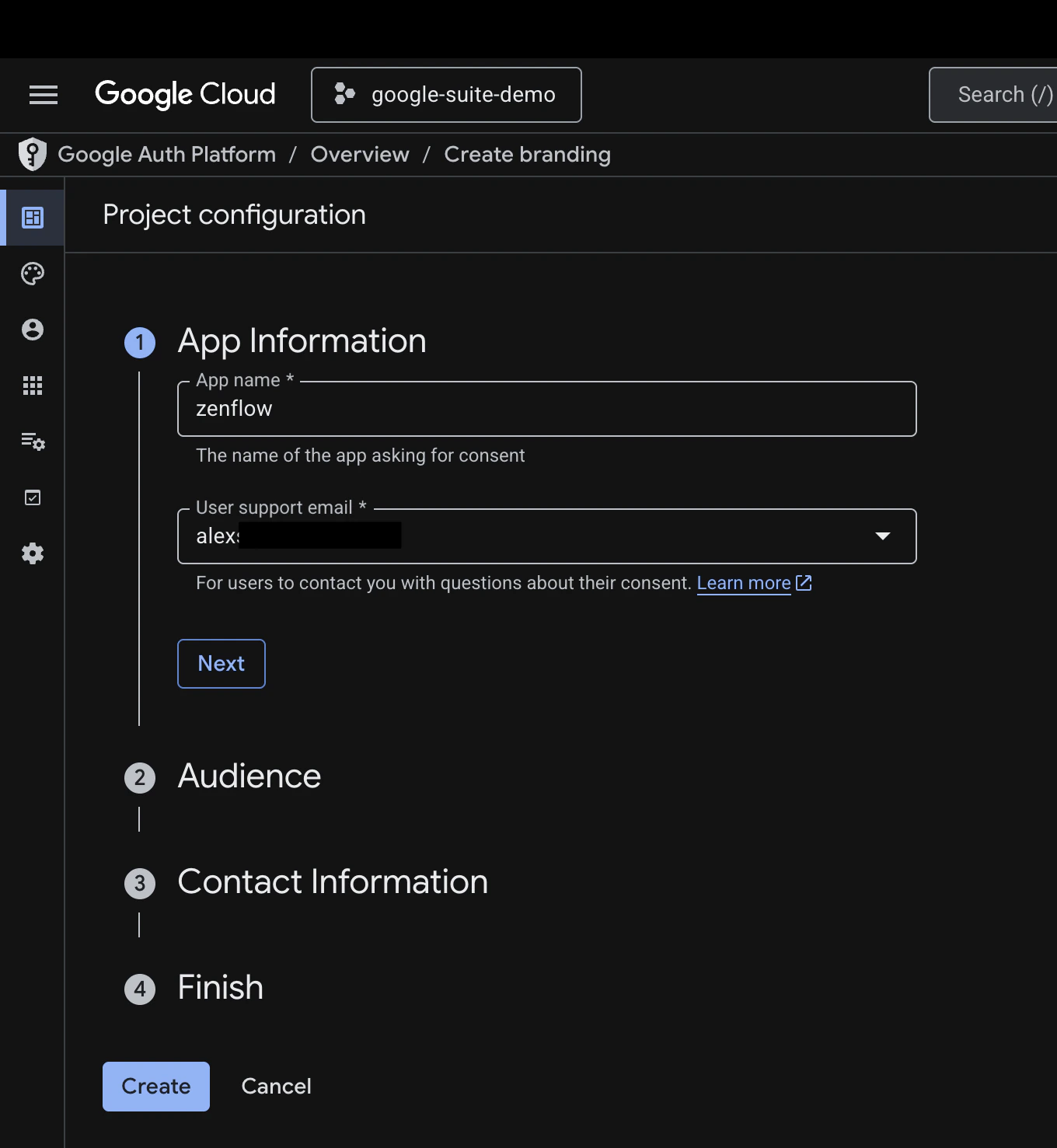
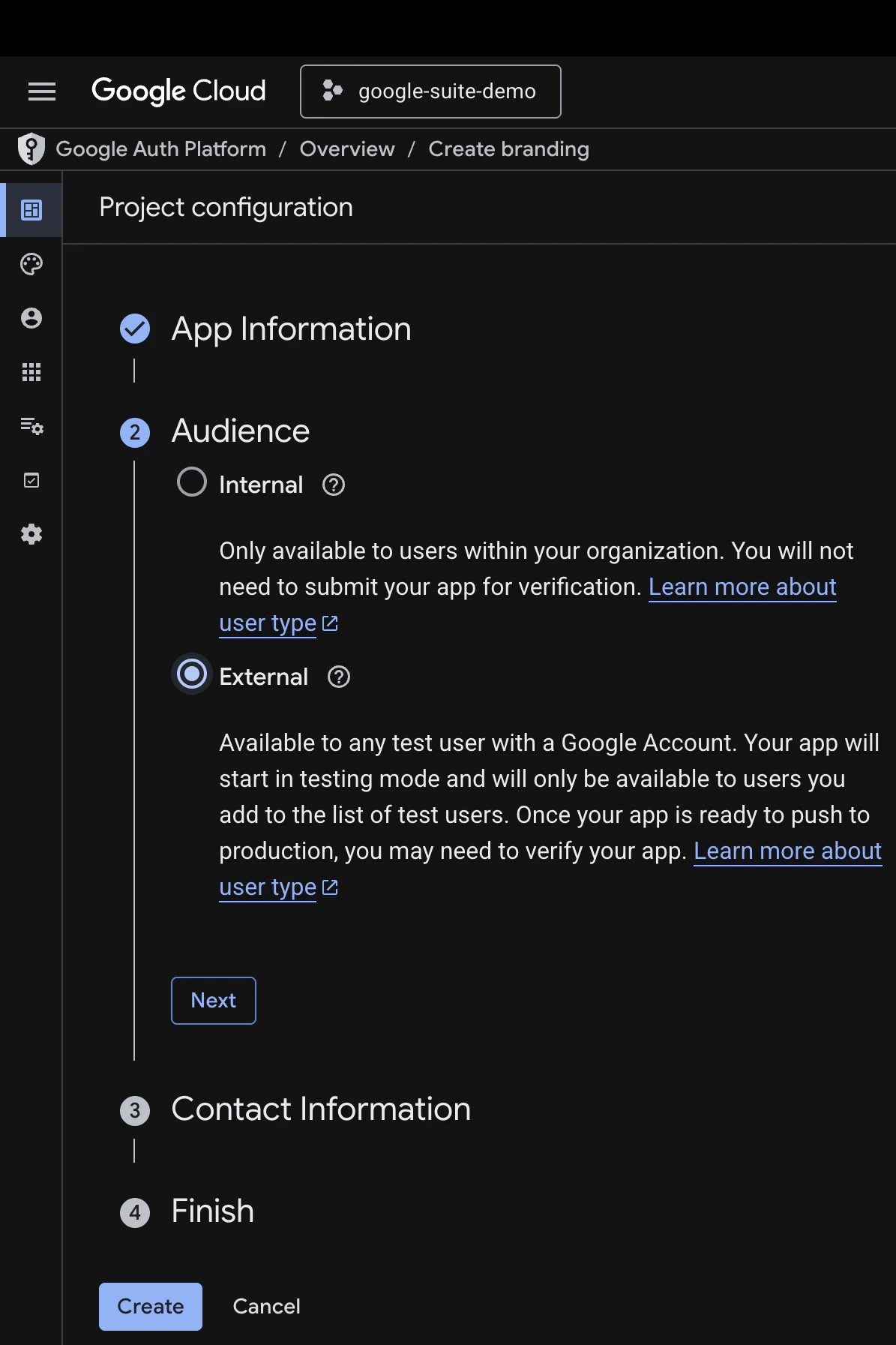
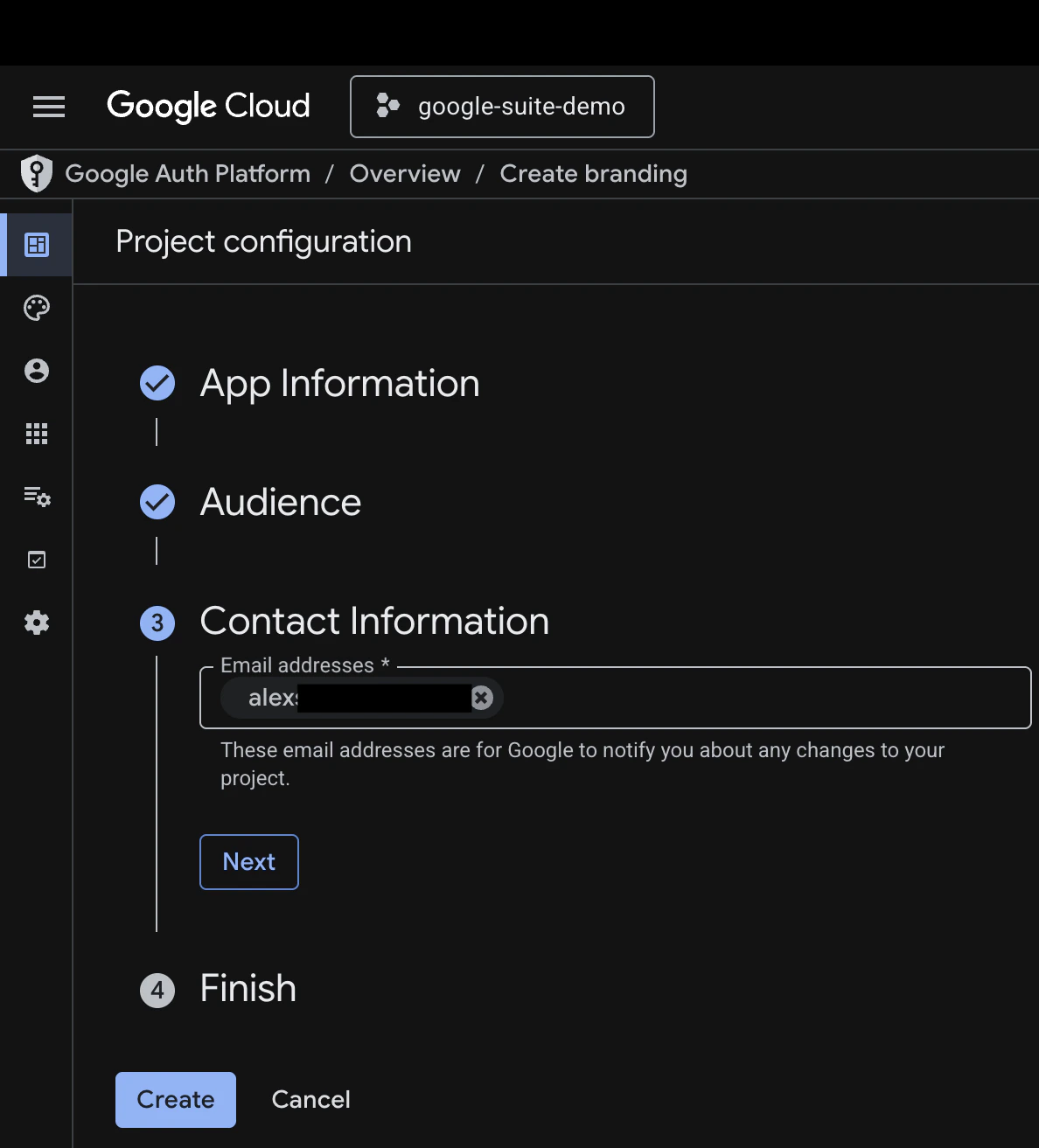
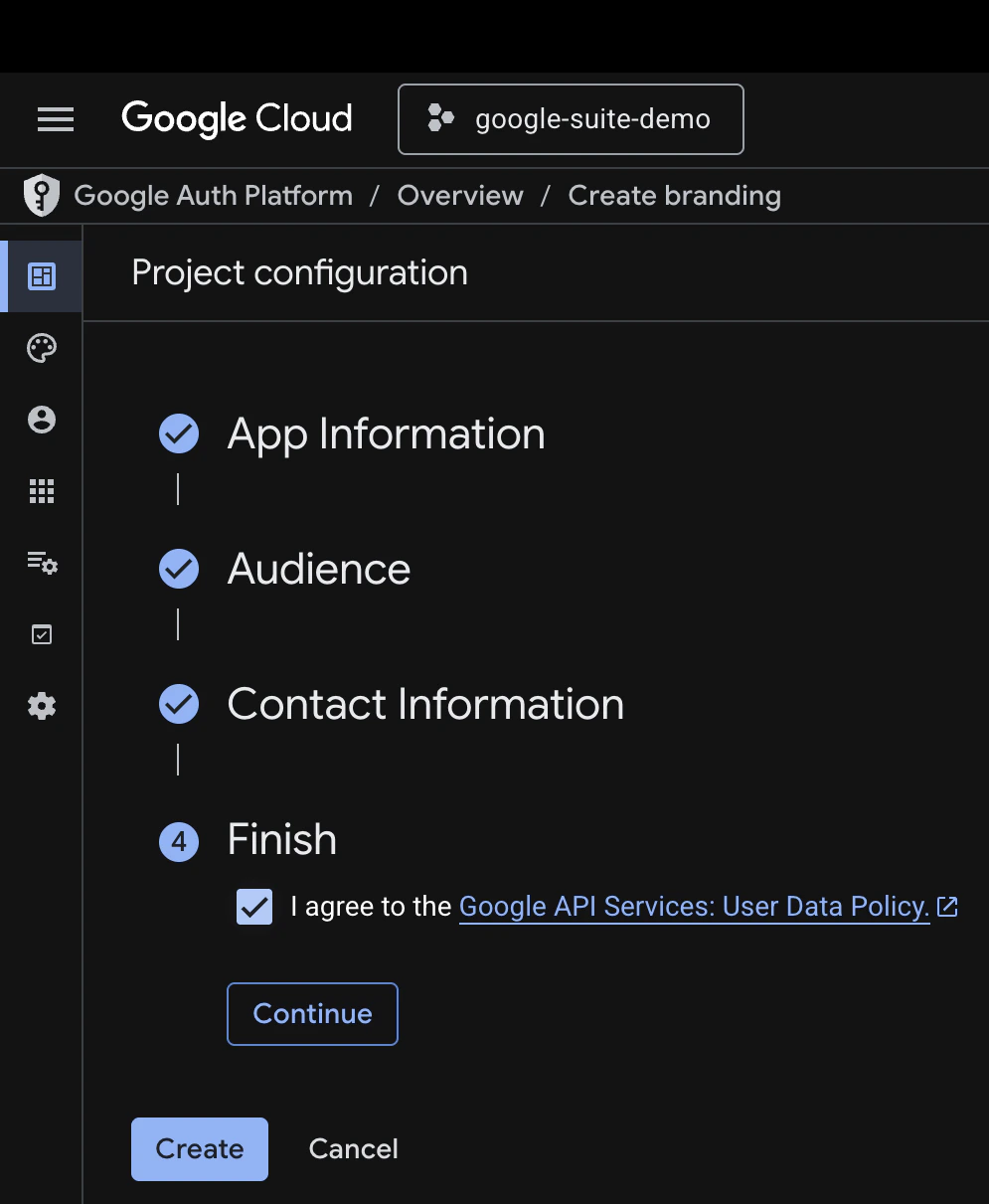
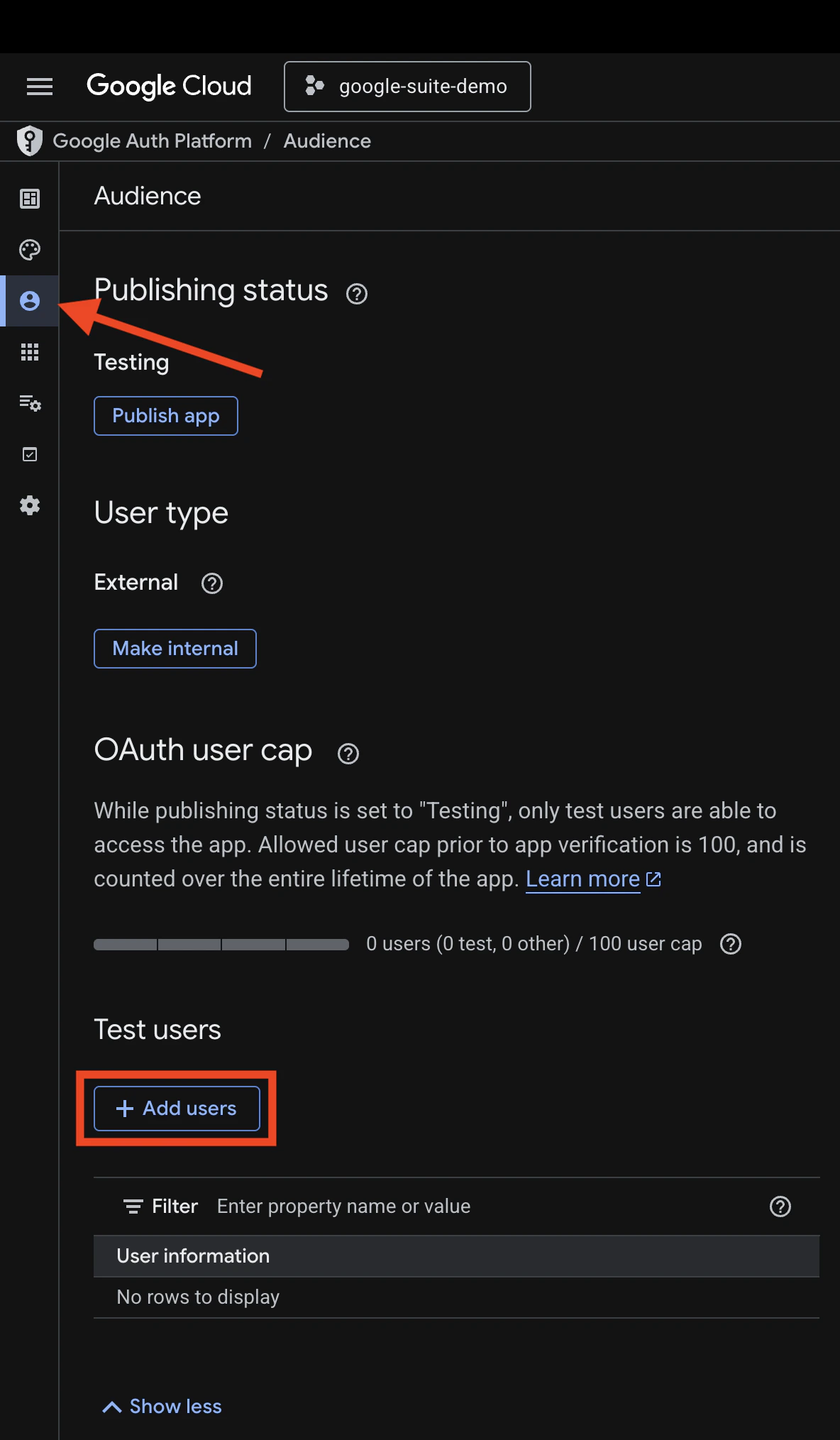
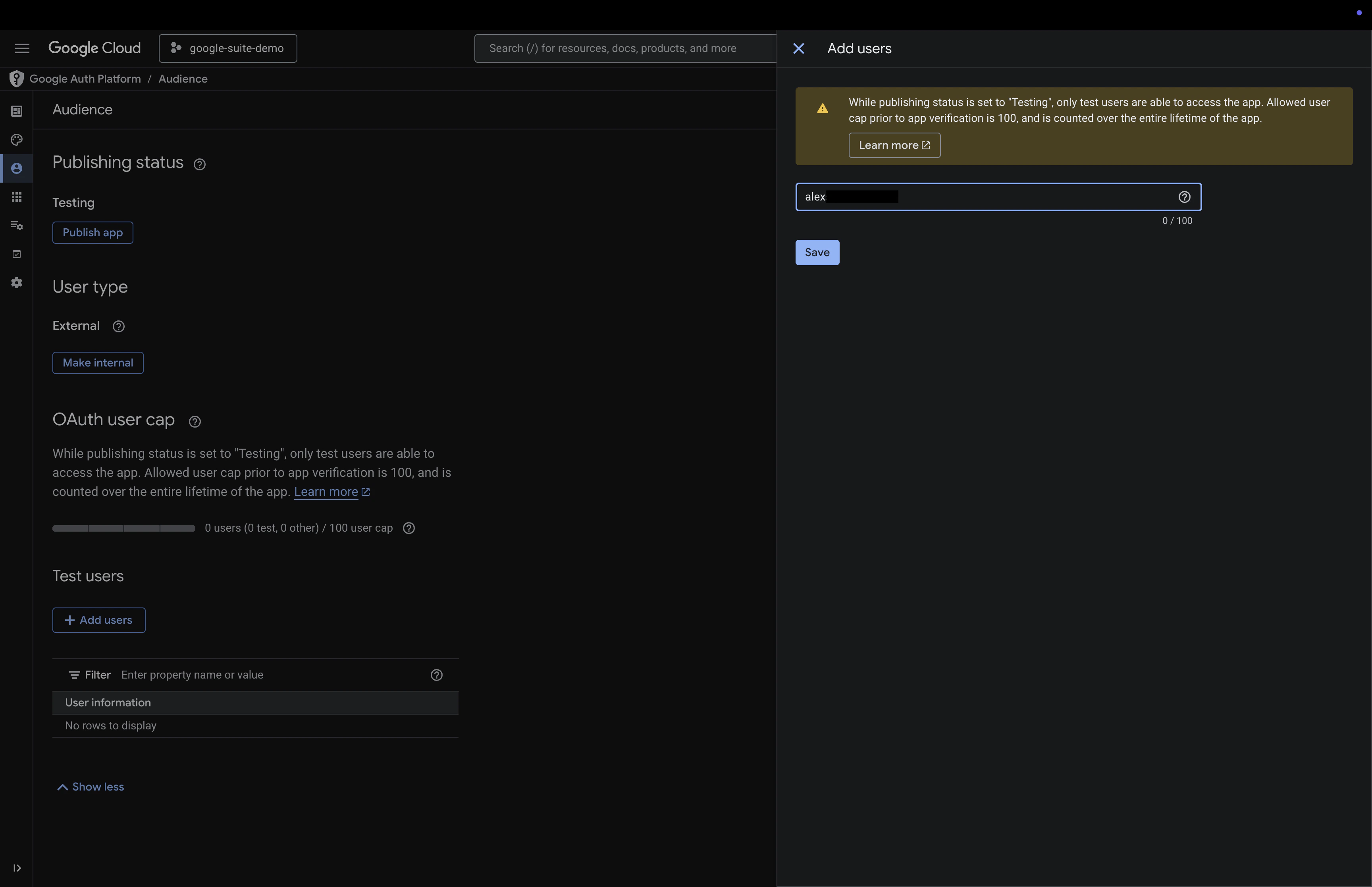
Create OAuth client credentials
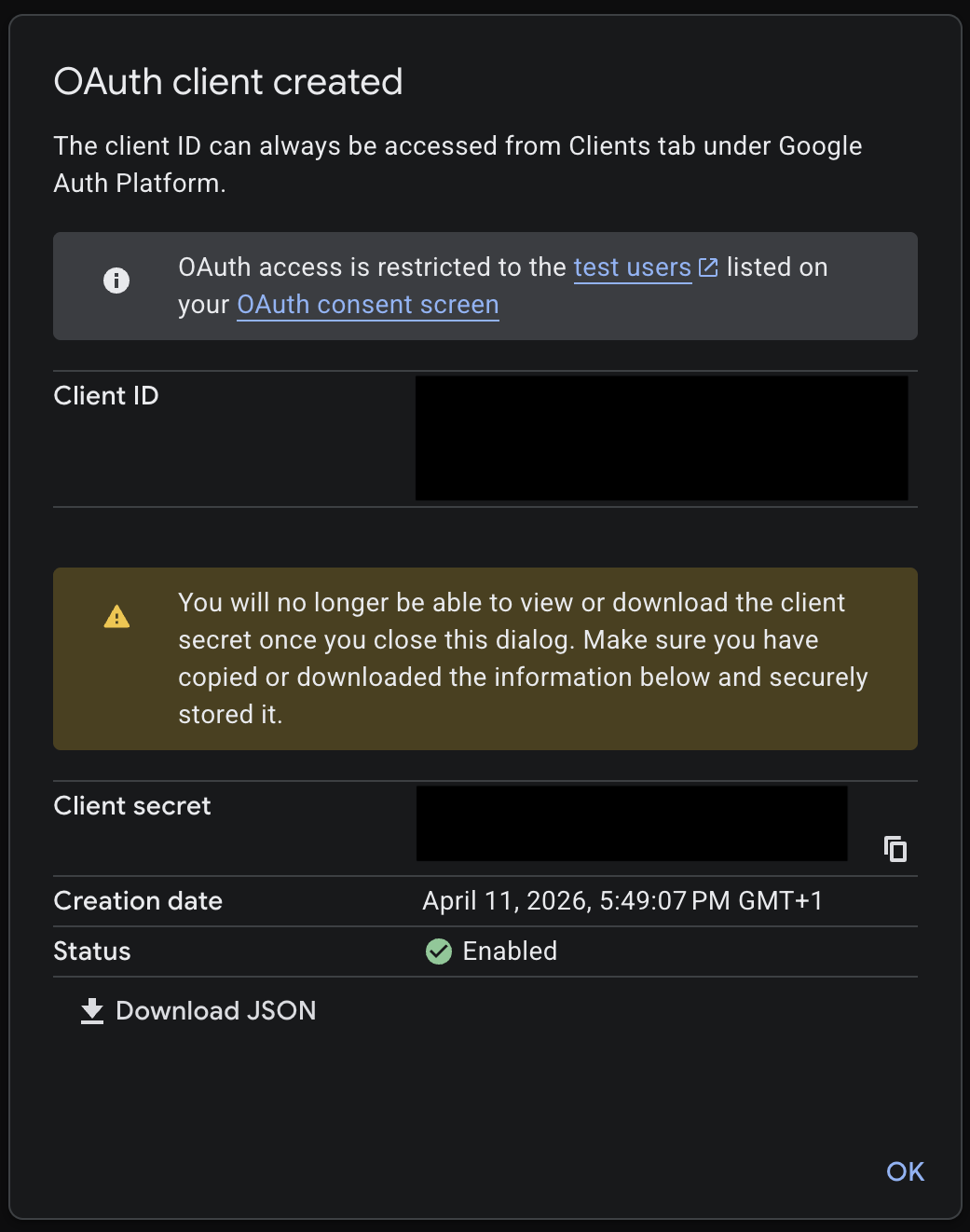
Go to Clients, click Create Client, select Desktop app as the application type, give desired na,e, and click Create.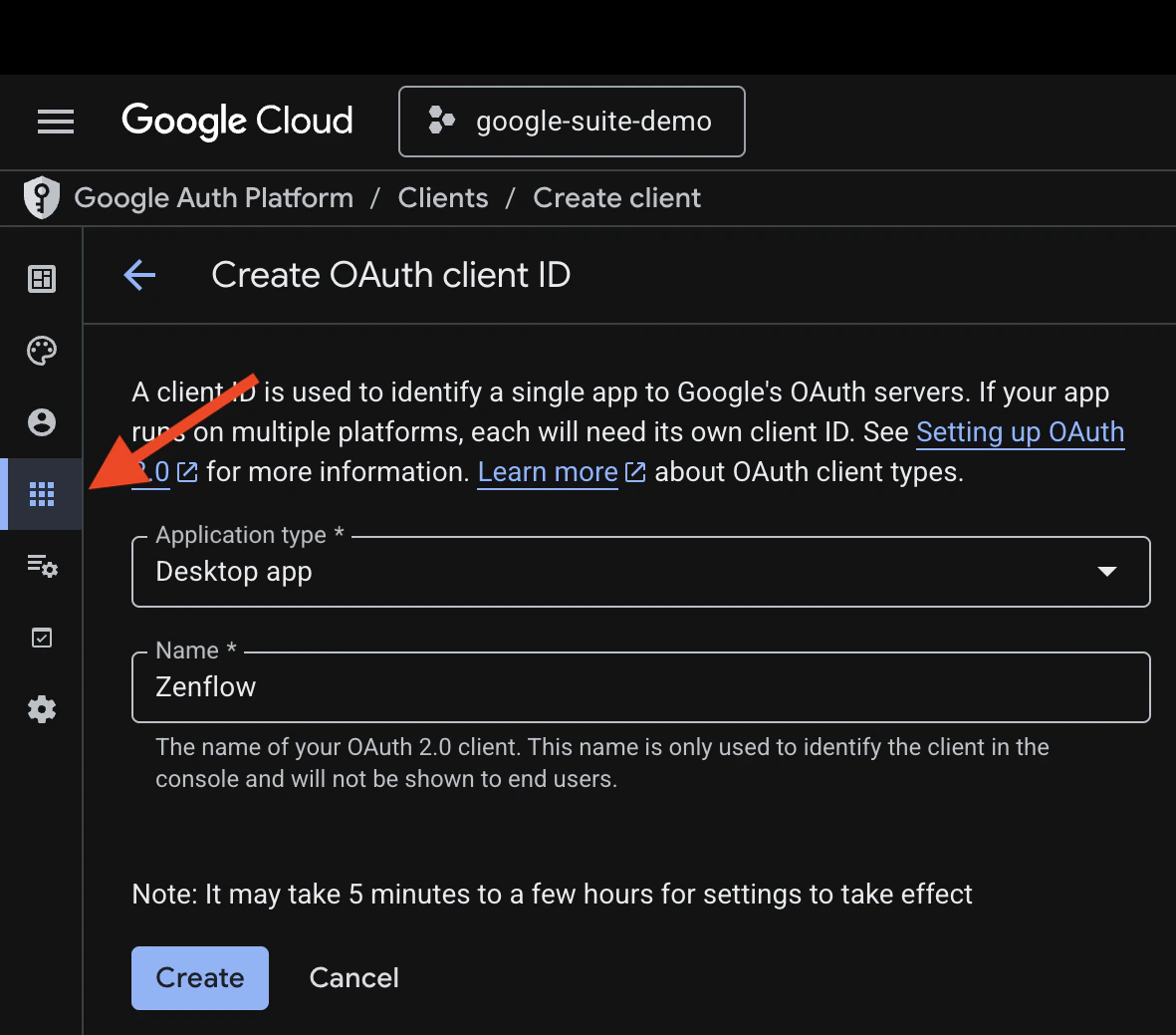
Step 2: Enable required APIs
Enable APIs for corresponding integrations that you want to enable. When opening links, make sure the project is set to the correct one in the dropdown in the top left cornerGmail
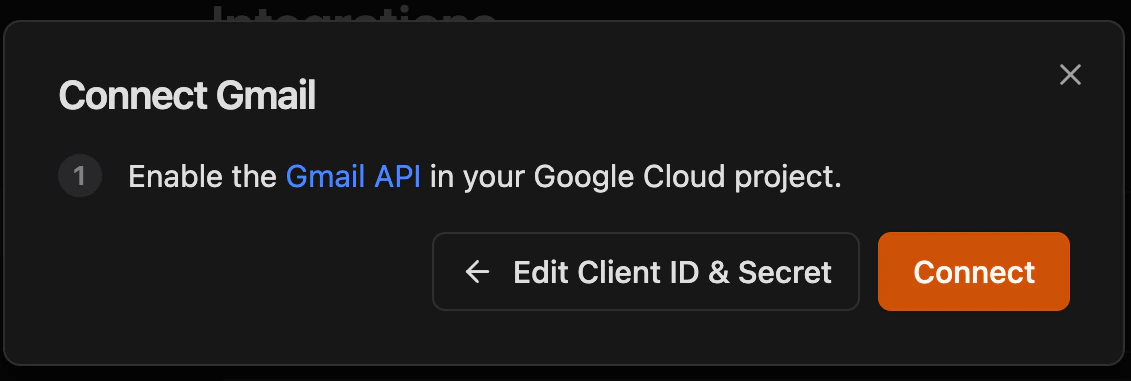
Navigate to Gmail API, click Enable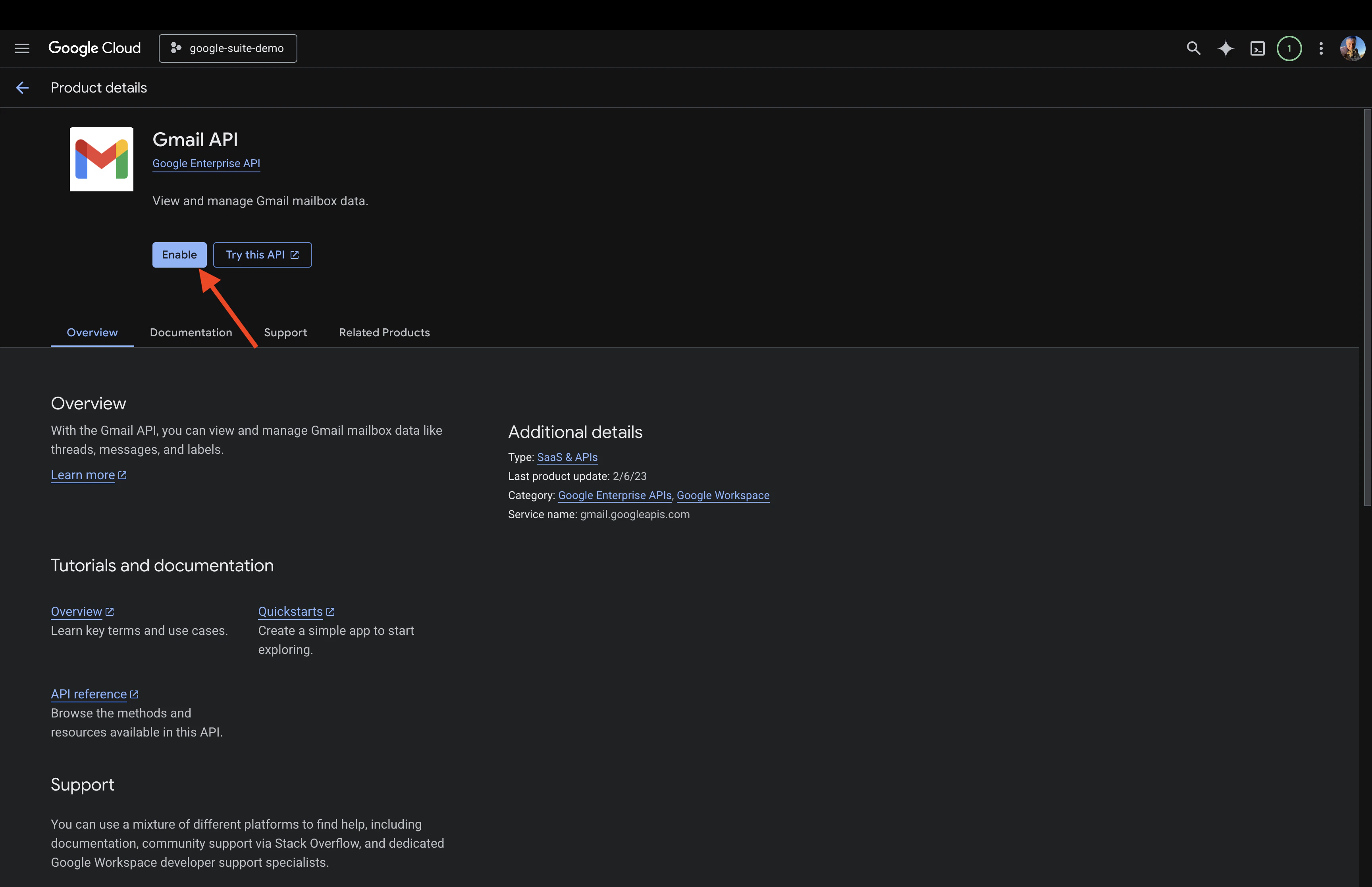
Google Calendar
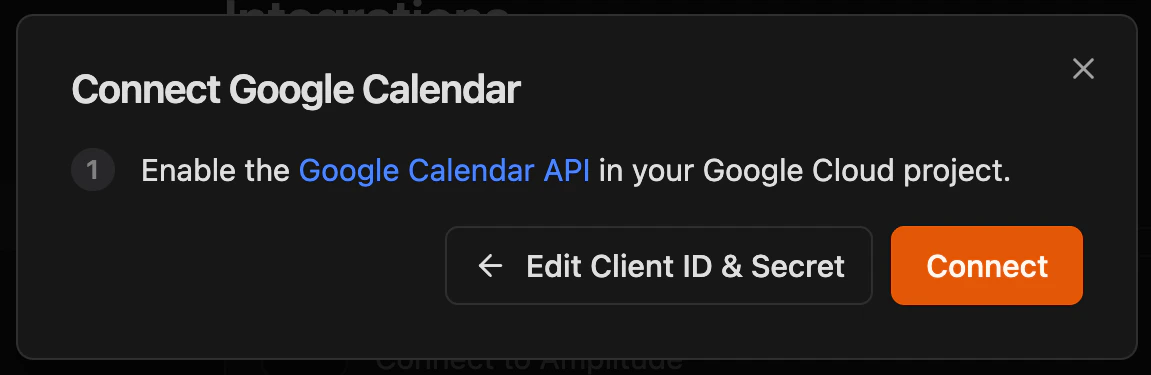
Navigate to Google Calendar API, click Enable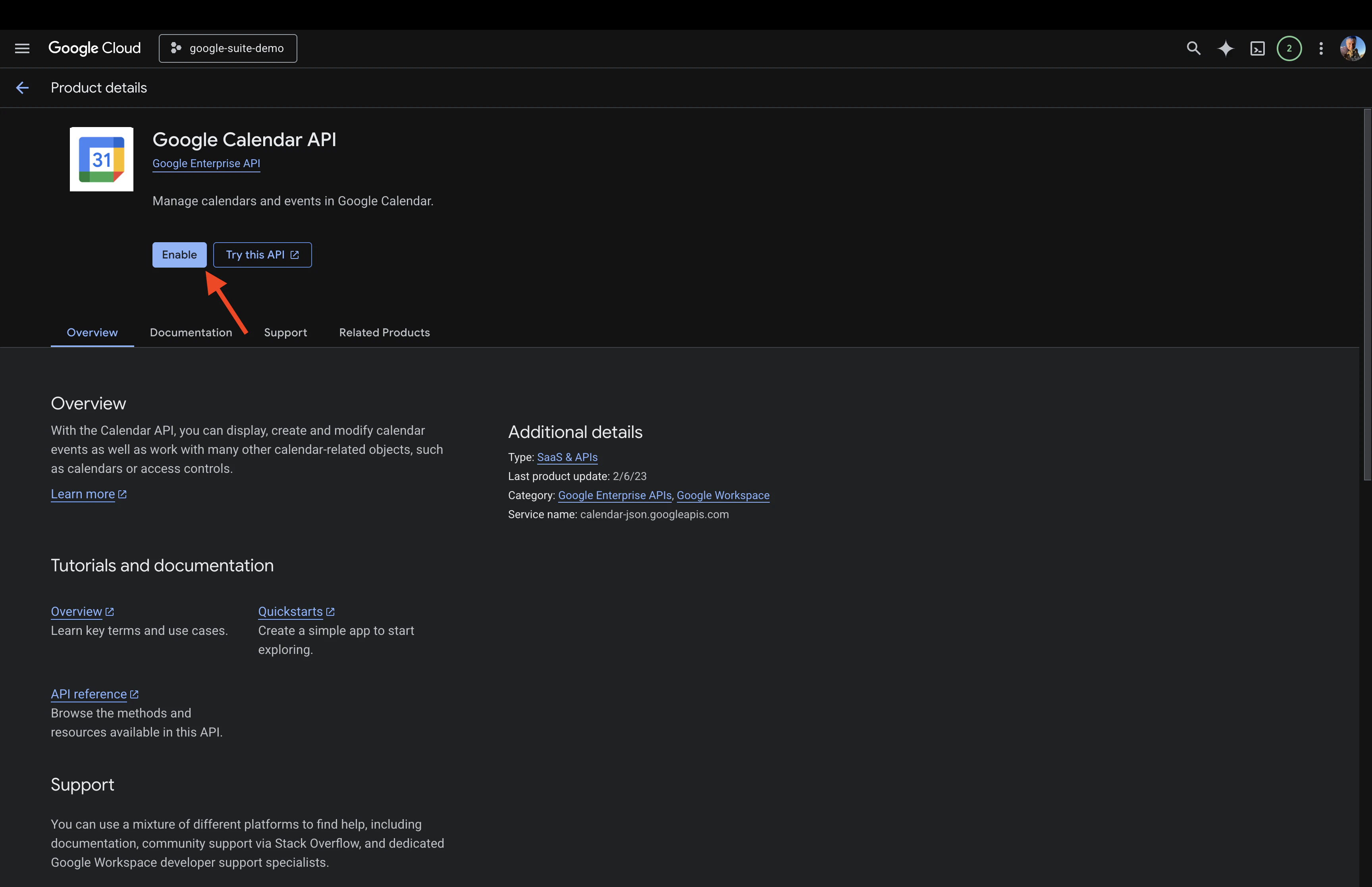
Gmail
Navigate to Google Drive API, click Enable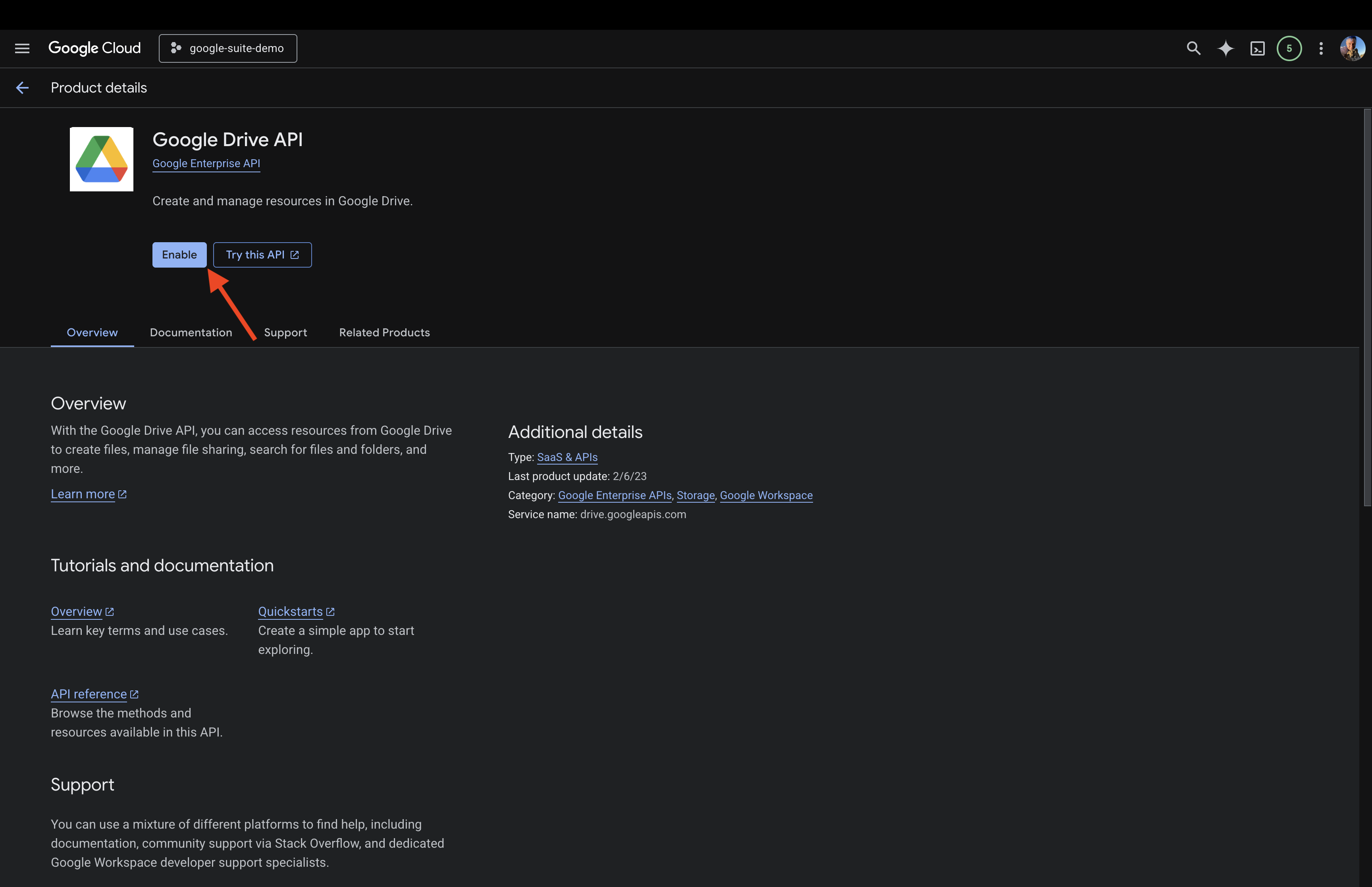
Step 3: Connect in Zenflow
- Gmail
- Google Calendar
- Google Drive & Docs
Open Zenflow Settings
Navigate to Settings in the Zenflow sidebar (the gear icon at the bottom left).
Choose your permission level
Select Read only or Read & Write from the dropdown depending on your needs.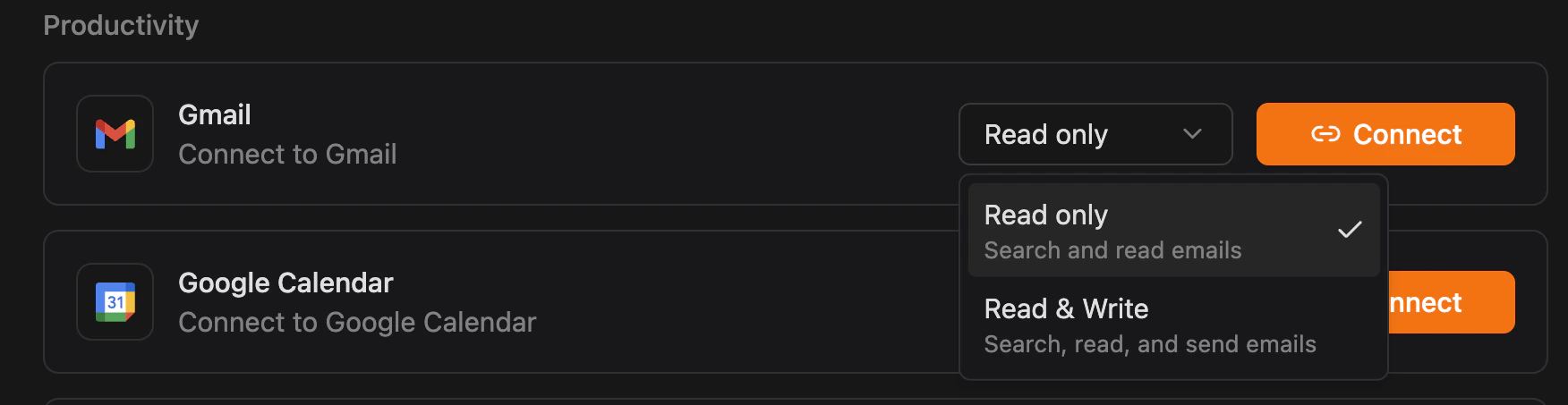
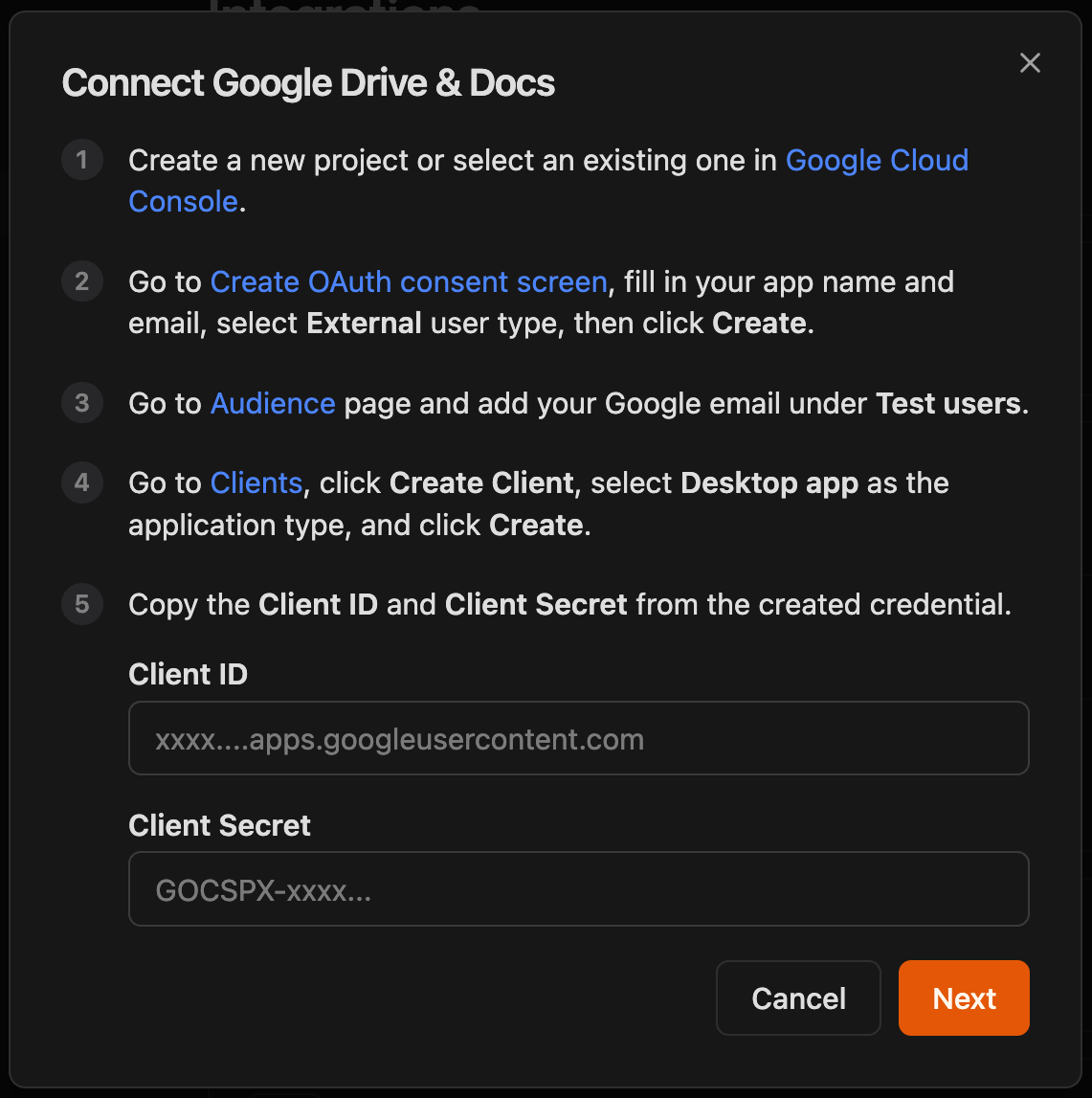
Click Connect and enter credentials
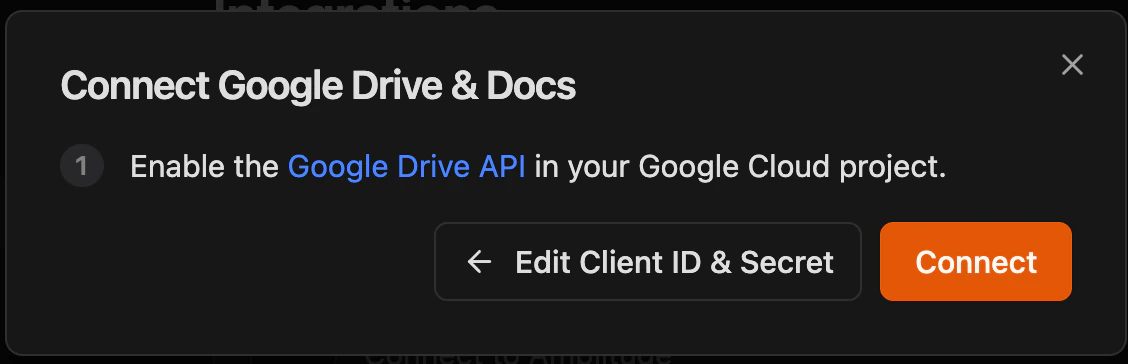
Click Connect, paste your Client ID and Client Secret from OAuth client created above, then click Next, enable Gmail API if haven’t done so yet (see Step 2 above) and click Connect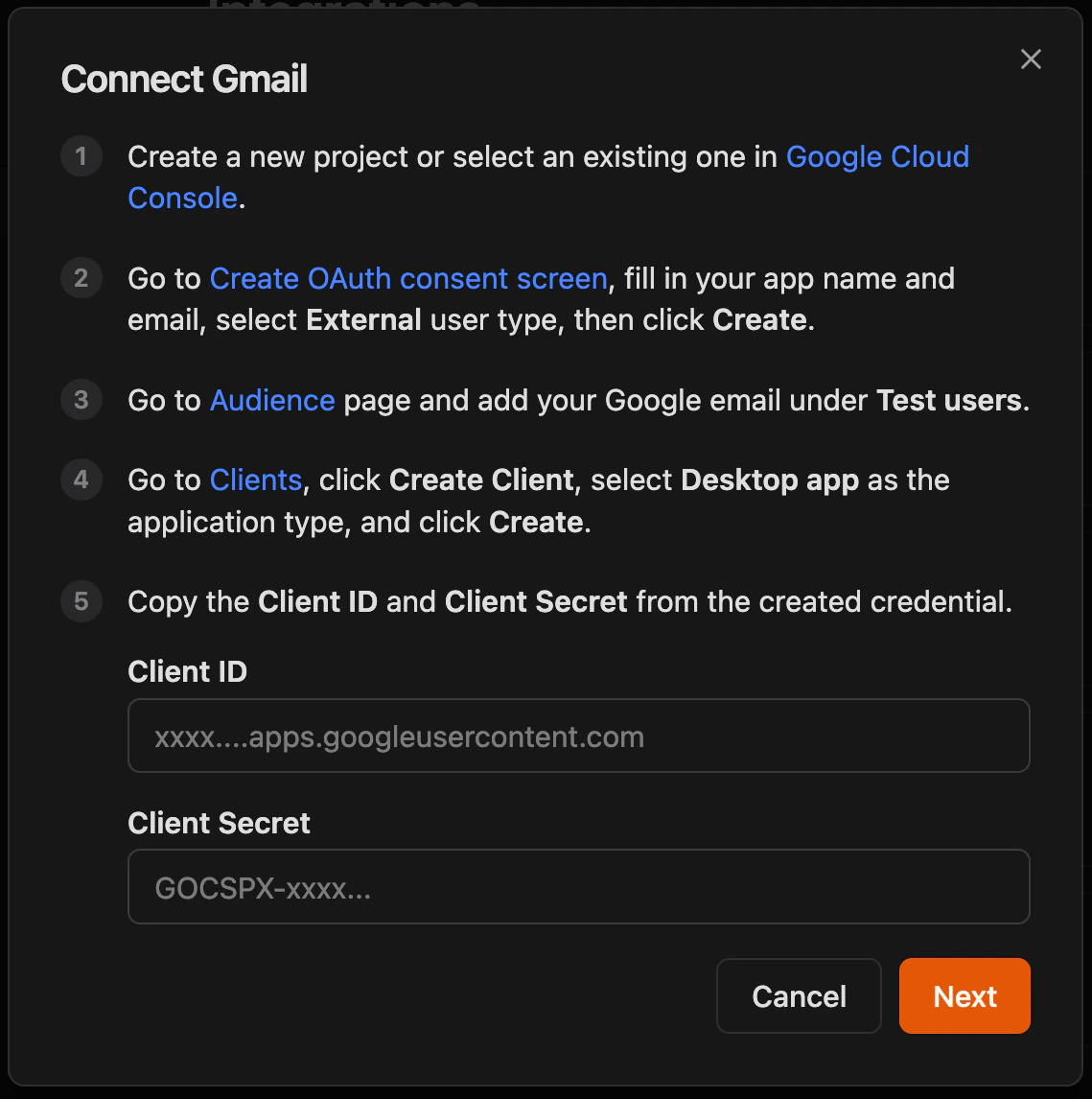
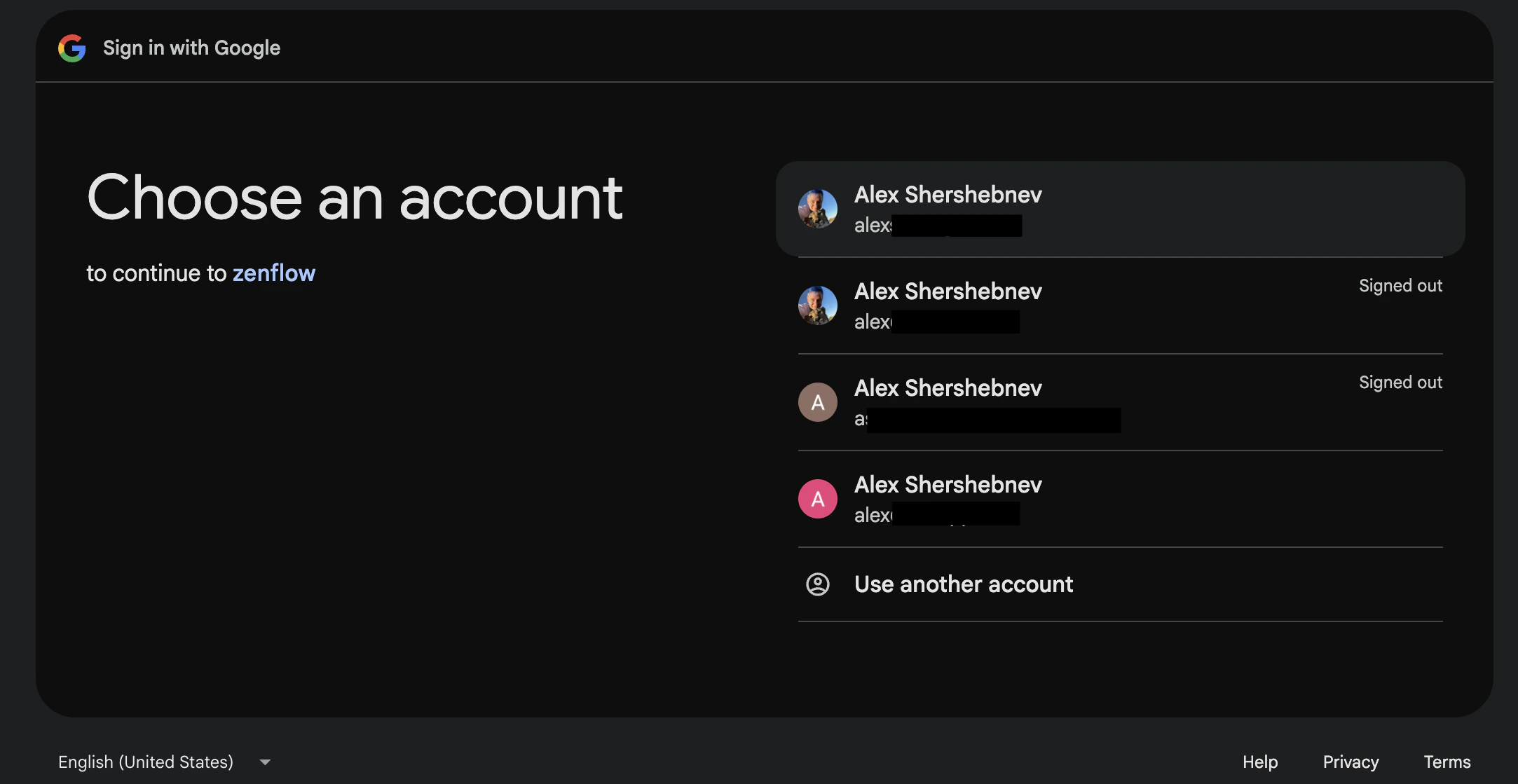
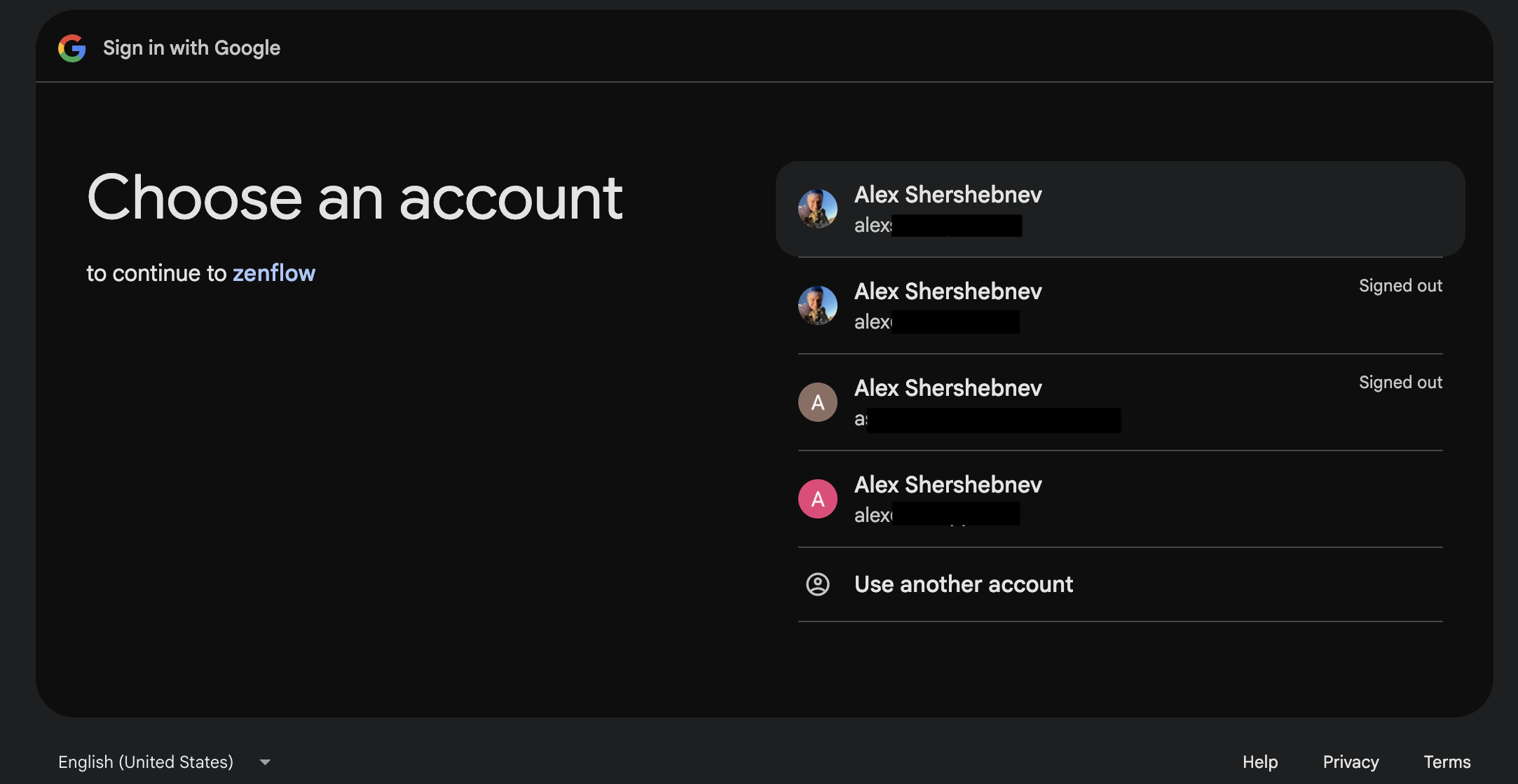
Choose an account
You will be redirected to a webpage where you need to select which account you want to connect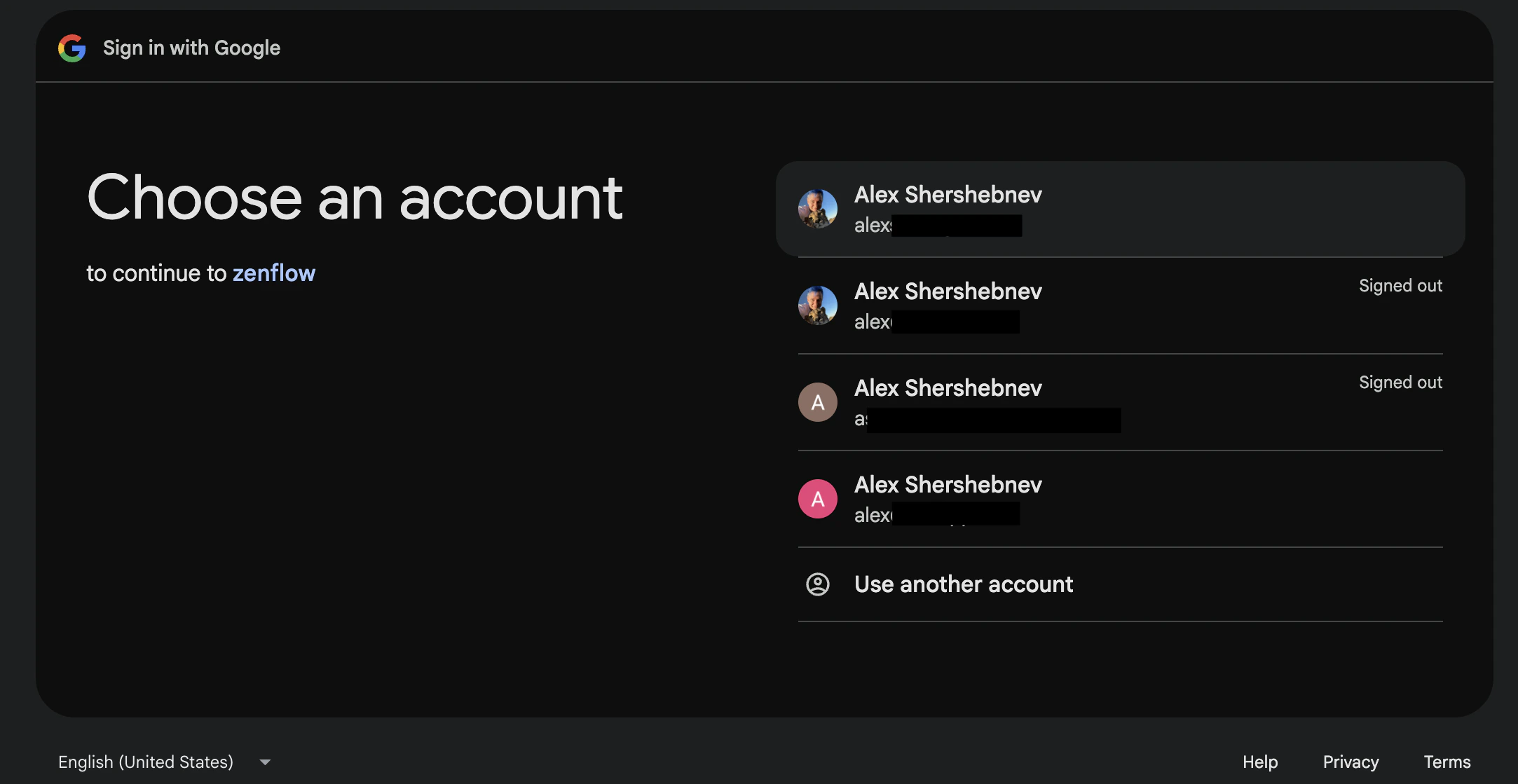
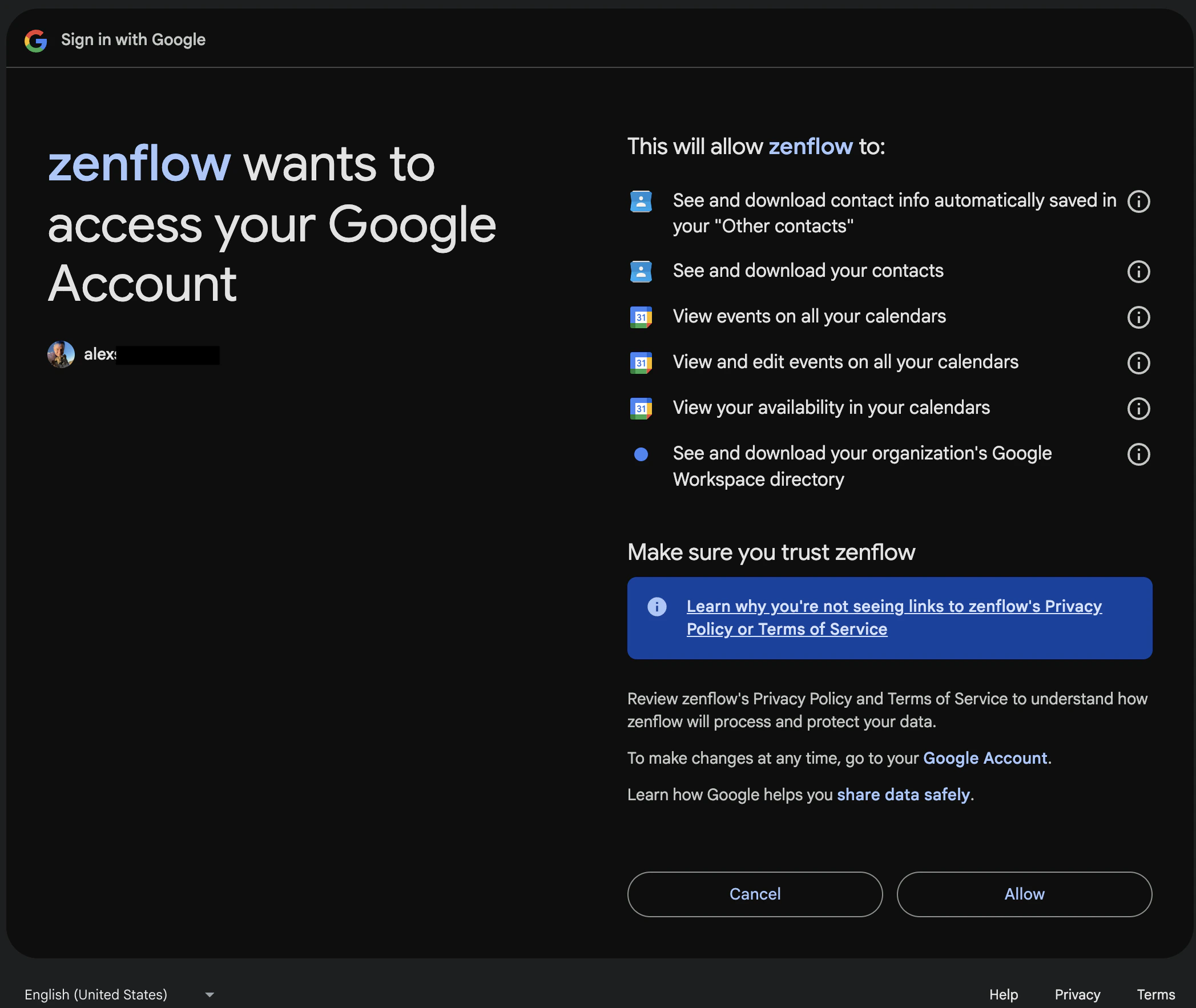
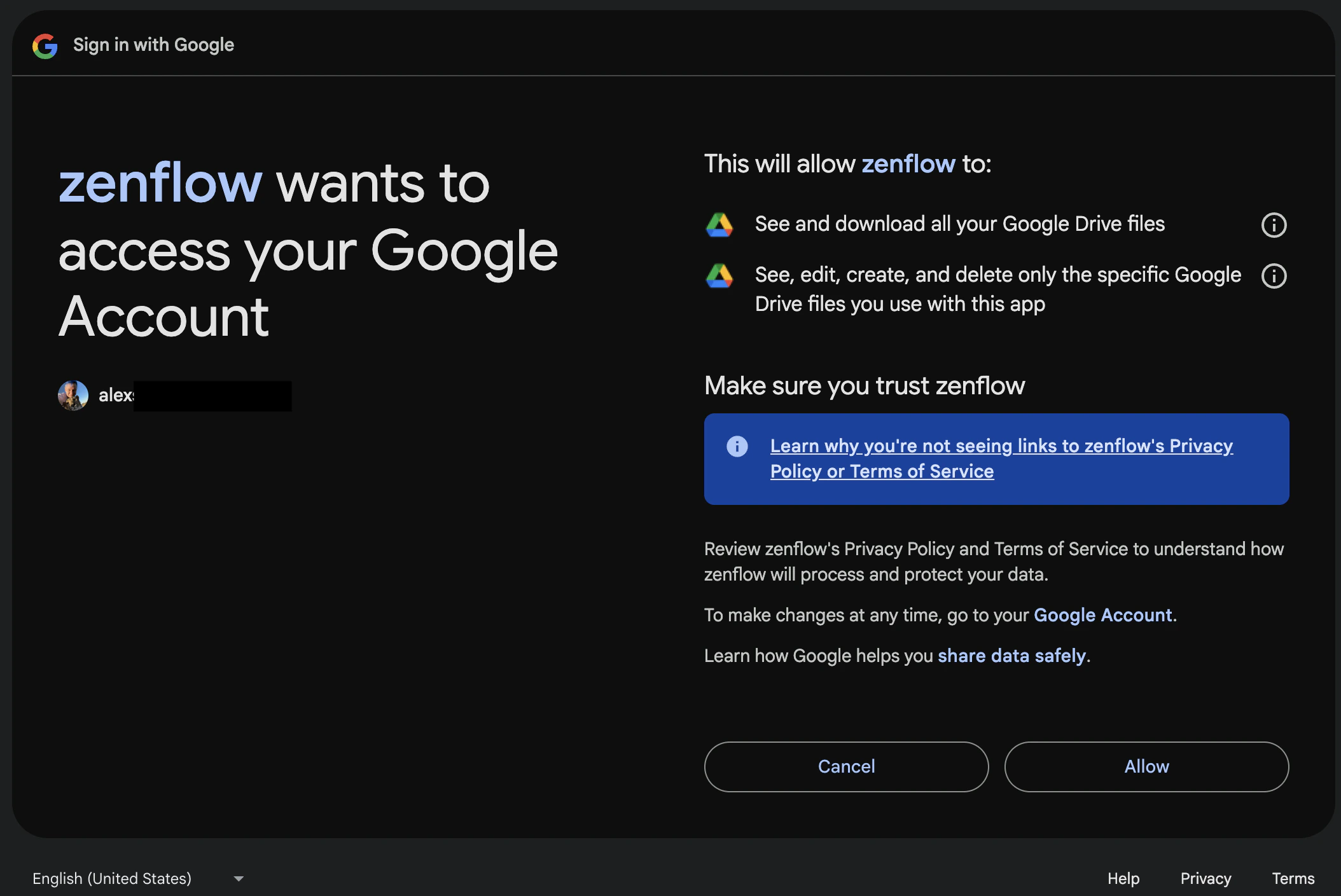
Allow access
After choosing an account, you’ll be redirected to the access authorization screen. If you’ve chosen Read only your scopes might be different from the screenshot below (it is for Read & Write)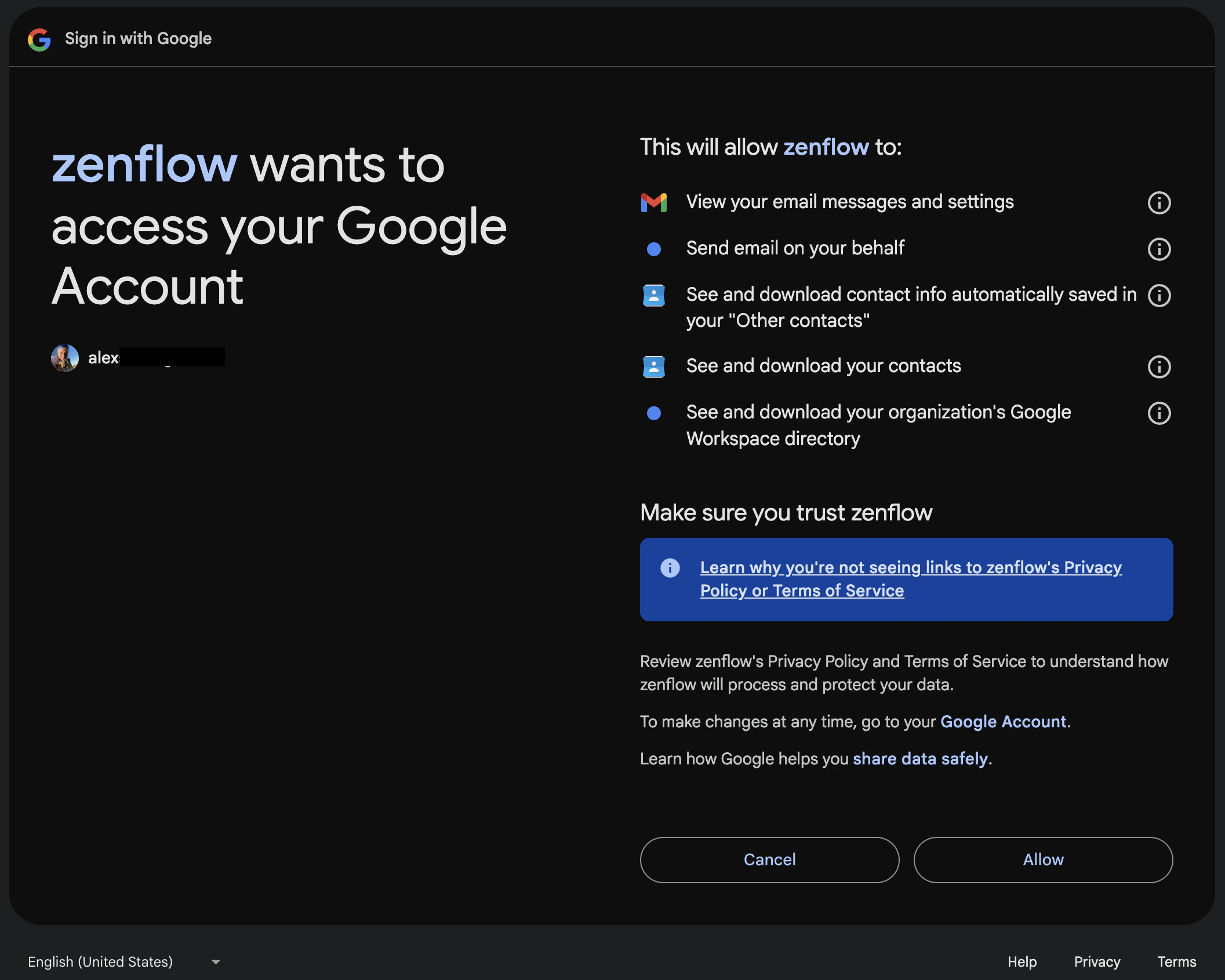



What the Agent Can Do
Gmail
- Search — Find emails by keyword, sender, recipient, date range, or label
- Read — Open and read full email threads including attachments
- Draft — Compose new emails or replies and save them as drafts for your review before sending
- Send — Send emails directly (requires Read & Write permission)
Google Calendar
- Read events — View upcoming meetings, attendees, and event details
- Check availability — Find open time slots across your calendar
- Create events — Schedule meetings, add attendees, and set locations or video links
- Set reminders — Create calendar reminders and recurring events
Google Drive & Docs
- Search — Find files and folders across your Google Drive by name, content, or type
- Read — Open and read Google Docs, Sheets, and Slides
- Create — Generate new documents, spreadsheets, and presentations
- Update — Edit existing documents with new content
- Organize — Create folders and move files into structured locations
- Write reports — Generate briefs, proposals, summaries, and formatted documents
Example Use Cases
Gmail
- Draft follow-up emails to prospects after sales calls
- Scan inbox for customer feedback or churn signals
- Compile weekly digest emails from project updates
- Auto-draft replies to common inquiries
Google Calendar
- Prepare meeting briefs by pulling context from calendar events
- Schedule follow-up meetings after sales calls
- Create onboarding calendar events for new hires
- Coordinate content publishing schedules
Google Drive & Docs
- Compile weekly executive briefs from multiple data sources into a Google Doc
- Create proposal drafts from email threads and save to a shared Drive folder
- Build expense reports by extracting data from Gmail receipts into Sheets
- Organize meeting notes into structured folders by team and date